Hindu funeral mantras/prayers

Hindu Funeral Prayers, Hindu funeral Mantras
According to Hindu funeral rituals, Hindu Funeral Prayers & Hindu funeral Mantras are very important in Hindu funerals because it believes that Hindu Funeral Prayers & Hindu funeral Mantras help to give peace to the soul. When Hindus are dying, they strive to attain the greatest state of consciousness possible. The family recites Hindu funeral mantras and Hindu funeral prayers according to Hindu funeral rituals, while they focus on the top of the deceased’s head. Additionally, they frequently use a mala, which is a string of beads intended to keep them focused on their Hindu funeral prayers or hindu funeral mantras.
Chanting Hindu funeral mantras/Hindu funeral prayers plays a big role in the Hindu faith, as they are thought to help you release positive energy, experience divine consciousness, and reach eternal peace. Because Hindu funeral mantras can provide serenity and comfort, Hindu funeral attendees often chant them hindu funeral mantras.
Here are some Hindu funeral mantras which you can chant at a Hindu funeral to give peace to the soul.
Hindu funeral mantras:
1) Hindu funeral shiva Gayatri mantras (Hindu funeral mantras) :
ॐ महादेवाय विद्महे रुद्रमूर्तये धीमहि
तन्नः शिवः प्रचोदयात्॥
Om Mahadevaya Vidmahe ,
Rudramurtaye Dhimahi,
Tannah Shivah Prachodayat॥
Benefits of Shiva Gayatri Mantra :
In Hindu funeral rituals Regular chanting of Shiva Gayatri Mantra as a Hindu funeral mantras gives peace of mind and keeps away all the evil from your life and makes you healthy, wealthy, and prosperous. Hindu funeral mantras give peace to the soul.
How to chant Shiva Gayatri Mantra/ Hindu funeral mantras according to Hindu funeral rituals:
To get the best result you should chant Shiva Gayatri Mantra early morning after taking bath and in front of God Shiva Idol or picture as a Hindu funeral mantras. You should first understand the Shiva Gayatri Mantra meaning in Hindi to maximize its effect.
These are very powerful Hindu funeral mantras that help you ask for forgiveness from Lord Shiva for any sin that you may have done along the course of your life. This extremely powerful Hindu funeral mantra/ Hindu funeral mantras helps us escape the fear of death.
Traditionally In Hindu funeral rituals all Hindus, with the exception of children, and saints are cremated, this is due to the Hindu belief that it is the fastest way for the soul to escape and be free from the tethers of the soul’s old body.
2) Hindu funeral mantras as a Hindu funeral prayer:
In Hindu funeral prayers, Hindu funeral Mantras:
||Om Namah Shivay ||
or you can chant Hindu funeral Mantras also this one
||Shivay Namah|| as Hindu funeral mantras.
Hindu funeral rituals take the form of chants Hindu funeral mantras as Hindu funeral prayers, which are specially written to be chanted at Hindu funerals. In Hindu funeral rituals, Hindu funeral mantras play an important role, Those who worship Lord Siva recite ‘Om Namah Sivayah,’ and also ‘Sivaya Namaha, These are our Hindu funeral mantras. ‘ These Hindu funeral Mantras are the most powerful Hindu funeral Mantras as Moksha God is Shiva’ (Mahadev). and these Hindu funeral mantras are God Shiva’s, this Hindu funeral mantras help a lot to give soul peace. In Hindu funerals and Hindu funeral rituals, Hindu funeral mantras As Hindu funeral prayers help to give moksha to the soul.
you can chant these Hindu funeral mantras in Hindu funeral prayers 108 times. According to Hindu funeral rituals, Hindu funeral mantras are given the soul peace.
According to Hindu funeral prayers In Hindu funeral mantras, The first is called Sthula Panchakshara and the second is called Sookshma Panchakshara.
Each of the letters in these Hindu funeral mantras has significance in Hindu funeral prayers for Hindu funeral mantras.
‘Na’ represents our pride.
‘Ma’ represents the impurities in our minds.
‘Si’ represents Lord Siva.
‘Va’ represents Goddess Sakti.
‘Ya’ represents the atma.
So when we say, ‘Sivaya Namaha,’ the atma, represented by ‘ya,’ is in the middle.
so, In Hindu funeral prayers Hindu funeral mantras On one side are pride and other impure thoughts represented respectively by ‘Na,’ and ‘Ma.’ On the other side of ‘ya,’ we have Lord Siva and Goddess Sakti represented by ‘Si’ and ‘Va.’
So it is for us to decide what we are going to do. Will we go the way in which temptation leads us? Or will we turn towards God? The ‘ya’ comes right next to ‘Va,’ for the Goddess is even more merciful than Lord Siva. After all, an erring child is afraid to approach its father. It first seeks forgiveness from its mother, who recommends to the father that he must not judge his child harshly.
In the same way, the Goddess makes sure that the Lord’s wrath is not directed toward us. She speaks to Him on our behalf. To get His mercy, we must go to Her first. His mercy then automatically comes to us.
or you can chant these Hindu funeral mantras also, The Hindu funeral mantras for the dying is Om Namo Narayana’ya. This is a Hindu funeral mantra that brings peace to the person on the way back to God and to those grieving. The Vaishnava tradition is for the grieving to chant the Hindu funeral mantras for 10 days and then perform the shraddah ceremony.
3) In Hindu funeral rituals there is the easiest Hindu funeral mantra is the
“OM”
The one universally recommended is Om (ॐ). ॐ (oṃ) = OM is a sacred sound and a spiritual symbol in Indian religions as a Hindu funeral prayer.
It is one of the most powerful Hindu funeral mantras.
These Hindu funeral mantras will help heal you, awaken you spiritually (bring enlightenment), minimize your negative karma in your present or future, and manifest the deep desires of your heart.
There are 3 ways to say them.
• Out loud with voice
• Whisper
• In your heart (mind). This is the most powerful way to do it.
4) In Hindu funeral According to Hindu funeral rituals the other Hindu funeral mantras is
|| Om Namo Narayanaya ||
The Hindu funeral mantras for the dying is Om Namo Narayana’ya. This is a hindu funeral mantras that brings peace to the person on the way back to God and to those grieving. At a Hindu funeral, The Vaishnava tradition is for the grieving to chant that Hindu funeral mantras for 10 days and then perform the shraddha ceremony you can also call Indian priests or Hindu priest for Hindu funeral uk vidhi as a hindu funeral rituals.
Let us bow to the divine.
At a Hindu funeral, attendees may chant the Hindu funeral mantras, “Om Namo Narayanaya,” which more specifically translates to “I bow to Lord Narayana.” Lord Narayana is the Supreme God.
Chanting this phrase helps give comfort to those grieving and peace to the deceased. In fact, the word “Narayanaya” represents as a Hindu funeral mantras the final resting place for those who pass away.
5) Mahamrityunjaya mantra
The Mahamrityunjaya mantra is for avoiding accidents and death as a Hindu funeral mantra. Mahamrutyunjaya mantra is also known as a Hindu funeral mantra, If people chant these Hindu funeral mantras while the person is really dying, it pulls on their soul and keeps them here, which can be painful for them.
It unification of three hindi words,
Maha- great,
Mrityun- death and Jaya- victory; the one who victor the death.
According to Hinduism, the Hindu funeral mantras is also referred to as the Mrita-Sanjivini mantra because of its “life-restoring” practice.
||ॐ त्र्यम्बकं यजामहे सुगन्धिं पुष्टिवर्धनम्
उर्वारुकमिव बन्धनान्मृत्योर्मुक्षीय माऽमृतात् ||
||Om tryambakaṃ yajāmahe sugandhiṃ puṣṭivardhanam
urvārukamiva bandhanānmṛtyormukṣīya mā’mṛtāt ||
“We worship the three-eyed Lord who is fragrant
and who nourishes and nurtures all beings.
Like the pumpkin, I am bound.
Liberate me from death for immortality.”
6) Garuda Gayatri Mantra
- Tatpurushaaya vidmahe suvarnapakshaaya dheemahi |
Tannoe garudah prachoedayaat ||
we meditate upon that Purusha.
We meditate upon the one who has beautiful colored wings for that purpose. May the Garuda invigorate us in our meditation to Purusha.
Shaanti Mantraah ( Mantras Praying For Peace)
- Vidhartaara(ga)m havaamahe vasoeh kuvidwaanaati nah |
Savitaaram nri-chakshasam ||
We invoke the Lord, the creator of the Universe. He is a unique supporter of the Universe. He is the one who endows us with knowledge. May that Lord grant us prosperity!
- Adyaa noe deva savitah prajaavat saavees-saubhagam |
Paraa dush-vapinya(ga)m suva ||
Oh resplendent Lord Savitar! You have blessed us with prosperity in the form of off-springs. Please help us discard the fear caused by bad dreams.
- Madhu vaataa ritaayate madhu ksharanti sindhavah |
maadhveer-nassantva-oeshadeeh ||
May the winds blow and rain shower bliss on me who is anxious to reach Paramaatman! May the oceans likewise be kind to me! May plants and herbs also be kind to me!
- Madhu naktam-utoshaci madhumat paarthiva(ga)m rajah |
madhu dyaur-astu nah pitaa ||
May all things bring pleasantness to me both during day and night! May all elements on earth be sweet to me! May the heavens, the abode of my ancestors (Pitrus) bring always a joy to me!
- Madhumaannoe vanspatir madhumaa(ga)m astu sooryah |
Maadhveer gaavoe bhavantu nah ||
May plants and trees be sweet to us! May the Lord Soorya (Sun God) be always pleasant to us! May the cows be sweet to us!
- Viswaani deva savitar duritaani paraasuva |
Yad bhadram tanma aasuva ||
Oh Resplendent Lord Savitar! You are the cause of the Universe; please destroy all our sins. Please grant us that which is good (for we even do not know what is good to us)!
These mantras are chanted seeking peace from external and atmospheric and natural disturbances that uproot our lives while conducting fire sacrifices (yajnas) for peace. This is a famous mantra chanted often.
7) Mrityunivaarana Mantraah (Mantras For Avoiding Death)
- Apaitu mrityur-amritam na aagan-vaivasvato noe abhayam krinotu |
parnam vanaspate rivaabhinas-seeyataa(Ga)m rayi s-sachataannas-sacheepatih ||
May Death turn away from us! May Immortality come to us! May Vaivasvata divinity Yama grant us safety! May our sins be destroyed like leaves that are separated from trees! May the imparting wealth come to us!
- Param mrityo anuparehi panthaam yaste sva itaro devayaanaat |
chakshushmate srinvate te braveemi maaa nah prajaa(ga)m reerisho mota veeraan ||
OH, Death! Go back by your own path which is different from that of God. I entreat you as one who is capable of seeing me and listening to me. Do not destroy our progeny. Do not strike down our Heroes.
- Vaatam praanam manasaa anvaa-rabhaamahe prajaapatim yo bhuvanasya gopaah |
Sa no mrityos-traayataam paatva(ga)mhaso jyogjeevaa jaraam-aseemahi ||
We heartily supplicate to the Lord of Beings who is the protector of the Universe and who is active within us Vital-breath and outside us as the Blowing Wind. May he guard us against death and protect us from sin. May we live gloriously in our old age.
- Amutra bhooyaa dadha yadyamasya brihaspate abhisasteramunchah |
pratyauhataam-asvinaa mrityu –masmaa-ddevaanaa-magne bhishajaa sacheebhih ||
Oh Supreme Lord! Release me from the fear of Yama and accusation of people and the necessity of being in the yonder world. Oh Agni! May the two divine physicians, The Asvins, chase away from our death by virtue of the merits of religious dedication.
- Hari haranta-manuyanti devaa visvasyesaanam vrishabham mateenaam |
Brahma saroopa-manumeda-maagaa-dayanam maa vivadheer-vikramasva ||
Like attendants, all gods (divine) follow Hari who is the Lord of the Universe, who leads all thoughts as the foremost leader, and who absorbs into the Universe at the time of dissolution. May this path to liberation taught in Vedas having the same form as Brahman open itself unto me! Do not deprive me of that! Strive to secure it for me!
- Salkair-agni-mindhaana ubahau lokau sanemaham |
Ubhayor-lokayor ridhvaa-ati mrityu taraamyaham ||
Kindling the consecrated fire with fagots of wood in order to perform fire sacrifice may I attain both the worlds. Having attained this world and the next (Bhooloka and pitruloka) I shall cross over death.
- Maa cchido Mrityo maa vadhhermaa mae balam vivriho maa pramosheeh |
Prajaam maa mae reerisha aayurugra nrichakshasam tvaa havishaa vidhema ||
Oh, Fierce Death! Do not cut off my life! Do not harm my interests. Do not cripple my strength, Do not subject me to deprivation. Do not hurt my progeny and life. I shall serve you with oblations; for, you are ever vigilant over deeds of men.
- Maa noe mahaantamuta maa noe arbhakam maa na ukshantamuta maa na ukshitam |
Maa noe vdheeeh pitaram moeta maataram priyaa maa nastanuvo rudra reerishah ||
- Maa nastoke tanaye maa na aayushi maa noe goshu maa noe asveshu reerishah |
Veeraanmaa noe rudra bhaamito vadheer-havishmanto namasaa vidhema tae ||
Oh, Rudra! Injure not our elders, our children, our adults capable of procreation, the fetus we have laid in the mother’s womb, and our father and mother. Do not hurt our dear selves!
The repetition of the same them in these mantras makes the passage a vivid record of deep feeling and reminds us of the most r famous Rigveda Mantra Mrityor maa Amritam Gamaya leads us from Death to Immortality
What is a mantra and how does it work?
Hindu funeral Mantras are powerful sounds. Hindu funeral Mantras are the sounds that when chanted produce great effects. These are chanted repeatedly and that is called Japa. Japa is a key part of Hindu funeral prayers or any prayers.
Hindu funeral Mantras are very rich in their meaning. While doing Japa one can meditate on the Hindu funeral mantra and its meaning. As the mind dwells more and more into that meaning, the mantra conditions the mind and takes it up to higher states, and forms the path to the great liberation – eternal bliss.
What makes Hindu funeral mantras so special as compared to normal words?
Hindu funeral Mantras are not composed by humans. One may wonder how can that be possible. Especially given that there are sages associated with the mantras. The point to be noted is that these sages are not composers of these mantras, as we would normally compose sentences. They are not the inventors, but they are the discoverers of the mantra. They get to know the mantras in a state in which these words do not emanate from their thoughts, but they are just passive audience to it. Those who go deep in meditation and realize God may be able to get a feel of this situation.
To be such a discoverer, even though they are just passive hearers, needs a great amount of qualification. Only the perfect one can unchangingly reproduce the mantra he has heard. The only one that is absolutely perfect is God. All other discoverers reproduce that mantra only as pure as their closeness to perfection.
Many families in the UK seek experienced priests who can perform Hindu funeral prayers with authenticity and compassion. Rituals may include chanting mantras, lighting the funeral pyre, offering pind daan, and conducting prayer meetings on specific days after the funeral. Proper guidance from a knowledgeable priest ensures every ritual is performed according to Hindu traditions.
The importance of Hindu funeral prayers lies in their spiritual meaning and the emotional support they provide to family members during difficult times. Families often arrange prayer ceremonies at home, temples, crematoriums, or community halls.
Professional priests offering Hindu funeral prayers in the UK can also help families understand the significance of each ritual and mantra. Choosing the right priest for Hindu funeral prayers ensures that the final rites are performed respectfully, peacefully, and according to sacred Hindu customs and beliefs.
Veda Samhitas are full of mantras and hence have been preserved for ages in their pure form by utilizing the various techniques like path, krama, jaTa, and Gana pATas, that ensure that the chanter clearly gets the correct letters and even the correct level of sound for each letter (svara). The chanters are advised to chant the Hindu funeral mantras only after getting the right pronunciation of them so that the mantras are preserved against deterioration over time. There would be gurus who initiate the disciple in a mantra. The guru ensures that the disciple got the mantra right so that the person can chant independently as well as initiate others in that mantra. Ensuring this preservation, the Vedas were passed on only through the tradition of guru and disciples and were never written down till the very recent past. (It is really amazing to note that without being written down the Vedas have been preserved in pure form across the land by these techniques. Though the texts are freely available now for anybody to read, it would be important to ensure that these mantras are properly learned and then chanted. This way the treasure that has been preserved so carefully over multiple millenniums does not deteriorate due to indifference.)
It is to be noted that many of the hymns of ThirumuRai are known to have the great powers of mantras that are practiced even today.
While there are plenty of mantras available, there are a few that are chanted with high esteem by the Shaivas. Definitely, those are highly powerful ones that can lead the chanter on the great path to Mukti (liberation). Pranava, paNJchAkashra, and Gayatri to name a few. For Shaivites, the Holy Five Syllables (paNJchAkshara) with or without the combination of the Pranava is the ultimate hindu funeral mantras.
- Mantras are energy-based sounds.
Saying any word produces an actual physical vibration. Over time, if we know what the effect of that vibration is, then the word may come to have meaning associated with the effect of saying that vibration or word. This is one level of energy basis for words.
Another level is intent. If the actual physical vibration is coupled with a mental intention, the vibration then contains an additional mental component that influences the result of saying it. The sound is the carrier wave and the intent is overlaid upon the wave form, just as a colored gel influences the appearance and effect of white light.
In either instance, the word is based upon energy. Nowhere is this idea more true than for the Sanskrit mantra. For although there is a general meaning which comes to be associated with Hindu funeral mantras, the only lasting definition is the result or effect of saying the mantra.
- Mantras are tools of power and tools for power.
They are formidable. They are ancient. They work. The word “mantra” is derived from two Sanskrit words. The first is “manas” or “mind,” which provides the “man” syllable. The second syllable is drawn from the Sanskrit word “trai” meaning “protect” or “free from.” Therefore, the word mantra in its most literal sense means “to free from the mind.” Mantra is, at its core, a tool used by the mind which eventually frees one from the vagaries of the mind.
But the journey from mantra to freedom is a wondrous one. The mind expands, deepens, and widens, and eventually dips into the essence of cosmic existence. On its journey, the mind comes to understand much about the essence of the vibration of things. And knowledge, as we all know, is power. In the case of mantra, this power is tangible and wieldable.
- Mantra energizes prana.
“Prana” is a Sanskrit term for a form of life energy that can be transferred from individual to individual. Prana may or may not produce an instant dramatic effect upon transfer. There can be heat or coolness as a result of the transfer.
Some healers operate through the transfer of prana. A massage therapist can transfer prana with a beneficial effect. Even self-healing can be accomplished by concentrating prana in certain organs, the result of which can be a clearing of the difficulty or condition. For instance, by saying a certain mantra while visualizing an internal organ bathed in light, the specific power of the mantra can become concentrated there with great beneficial effect.
- Mantras eventually quiet the mind.
At a deep level, the subconscious mind is a collective consciousness of all the forms of primitive consciousnesses which exist throughout the physical and subtle bodies. The dedicated use of mantra can dig into subconscious crystallized thoughts stored in the organs and glands and transform these bodily parts into repositories of peace.
Some of you may be interested or even fascinated by the discipline of Hindu funeral mantras, but feel somewhat overwhelmed by the array of mantras and disciplines, autostarts, and pujas you find here. If so, then this chapter will be of use to you. It contains some simple mantras and their common application. They have been compiled from Vedas and Upanishads, drawn from the various headings of the deities or principles involved. These mantras address various life issues which we all face from time to time.
According to the Shrimad Bhagwad Geeta, In Hindu funeral the soul never dies, only the bodies die. Then what does death mean? Is there any Shloka or Stotram explaining death?
Lord Krishna gives a very clear definition about death in Bhagavad Gita 2.22:
vāsāṁsi jīrṇāni yathā vihāya
navāni gṛhṇāti naro ’parāṇi
tathā śarīrāṇi vihāya jīrṇāny
anyāni saṁyāti navāni dehī
Translation:
As a person puts on new garments, giving up old ones, the soul similarly accepts new material bodies, giving up the old and useless ones.
Krishna also mentions that death is a very natural process and a sane person is not bewildered by it (BG 2.13):
dehino ’smin yathā dehe
kaumāraṁ yauvanaṁ jarā
tathā dehāntara-prāptir
dhīras tatra na muhyati
Translation:
As the embodied soul continuously passes, in this body, from boyhood to youth to old age, the soul similarly passes into another body at death. A sober person is not bewildered by such a change.
Then Krishna also reveals that death is certain for all living entities who have accepted a material body and it is no cause for lamentation (BG 2.27):
jātasya hi dhruvo mṛtyur
dhruvaṁ janma mṛtasya ca
tasmād aparihārye ’rthe
na tvaṁ śocitum arhasi
Translation:
One who has taken his birth is sure to die, and after death one is sure to take birth again. Therefore, in the unavoidable discharge of your duty, you should not lament.
Krishna reveals the art of dying in the 8th chapter, where he mentions that whatever state of being a person remembers at the time of death, that state he achieves for sure:
Bg 8.6 — Whatever state of being one remembers when he quits his body, O son of Kuntī, that state he will attain without fail.
Therefore Krishna suggests that one should remember Krishna at the time of death so that he can return to the eternal spiritual world and live happily with Krishna:
Bg 8.5 — And whoever, at the end of his life, quits his body remembering Me alone at once attains My nature. Of this, there is no doubt.
But, it is not easy for a normal person to remember Krishna at the time of death because the soul is in a troubled condition at the time of leaving the body, therefore Krishna suggests that one should practice throughout his life so that one can think of Krishna at the time of death. And how we practice is explained in BG 8.7. Here Krishna very clearly says tasmat sarvesu kalesu – therefore at all times, mām anusmara – one should remember me (Krishna). And to remember Krishna at all times, one must offer his mind and intelligence to Krishna – mayy Arpita-mano-buddhir. Here is the exact verse (Bg 8.7) and the purport from Srila Prabhupada:
tasmāt sarveṣu kāleṣu
mām anusmara yudhya ca
mayy arpita-mano-buddhir
mām evaiṣyasy asaṁśayaḥ
Translation:
Therefore, Arjuna, you should always think of Me in the form of Kṛṣṇa and at the same time carry out your prescribed duty of fighting. With your activities dedicated to Me and your mind and intelligence fixed on Me, you will attain Me without a doubt.
This instruction to Arjuna is very important for all men engaged in material activities. The Lord does not say that one should give up his prescribed duties or engagements. One can continue them and at the same time think of Kṛṣṇa by chanting Hare Kṛṣṇa. This will free one from material contamination and engage the mind and intelligence in Kṛṣṇa. By chanting Kṛṣṇa’s names, one will be transferred to the supreme planet, Kṛṣṇaloka, without a doubt.
Srila Prabhupada also explains this point very clearly in the “Introduction” to Bhagavad Gita As It Is. Here is an excerpt from the Introduction:
We work not with our body, actually, but with our mind and intelligence. So if the intelligence and the mind are always engaged in the thought of the Supreme Lord, then naturally the senses are also engaged in His service. Superficially, at least, the activities of the senses remain the same, but the consciousness is changed. The Bhagavad-gītā teaches one how to absorb the mind and intelligence in the thought of the Lord. Such absorption will enable one to transfer himself to the kingdom of the Lord. If the mind is engaged in Kṛṣṇa’s a service, then the senses are automatically engaged in His service. This is the art, and this is also the secret of Bhagavad-gītā: total absorption in the thought of Śrī Kṛṣṇa.
Hindu Funeral Services in the UK: Supporting Families with Traditional Customs
Arranging a funeral for a loved one is an emotional and important responsibility. For Hindu families living in Britain, maintaining religious traditions while managing practical arrangements can sometimes be challenging. Understanding the customs and finding experienced religious guidance can help families organise a respectful farewell.
A traditional Hindu funeral involves various religious practices intended to honour the departed soul and support the family during bereavement. Families arranging a Hindu funeral UK often need assistance coordinating religious ceremonies, cremation arrangements and traditional observances.
Importance of Choosing an Experienced Hindu Priest
Choosing the right priest is an important part of arranging religious ceremonies. Experienced Indian priests understand the significance of traditional customs and can guide families through the necessary preparations.
If you are searching for a hindu priest near me, it is helpful to find someone who understands your family’s regional traditions and religious preferences. A knowledgeable hindu priest london or hindu priest uk can provide guidance according to the family’s requirements.
A professional hindu priest for funeral ceremonies can help conduct the necessary rituals and explain their significance to family members. Whether you require a Hindu priest for a traditional ceremony or additional hindu priest services, advance communication can make arrangements easier.
Understanding Hindu Funeral Arrangements
Hindu funeral rituals vary according to regional customs, family traditions and religious practices. Some families observe specific ceremonies over several days following cremation.
The Hindu funeral rites 13 days tradition is particularly important in many Hindu communities. These observances may include prayers, offerings and remembrance ceremonies. Families can discuss the appropriate arrangements with their priest.
Traditional Hindu funeral mantras and Hindu funeral prayers are also an important part of religious observances. The selection of prayers depends on family traditions and the ceremony being performed.
Families should discuss the arrangements with experienced Indian priests who can explain the customs and help organise suitable ceremonies.
Understanding Hindu Funeral Cost in the UK
One common concern is the hindu funeral cost UK. Expenses can vary depending on the location, priest’s travel, ceremony requirements and additional religious services. Families should request clear information about fees before confirming arrangements.
When comparing hindu priest services, consider experience, communication and understanding of traditional customs alongside the overall cost.
Finding Comfort Through Sacred Chanting Hindu funeral mantras
The loss of a loved one is a deeply emotional experience, and faith can provide comfort during this difficult time. Hindu funeral mantras are traditionally chanted to create a peaceful and devotional atmosphere, allowing family members to come together in remembrance.
Hindu funeral prayers may be offered at home, at the crematorium or during a memorial gathering. These moments of Hindu funeral prayers give relatives and friends an opportunity to express their love, seek peace and support one another.
In hindu funeral rituals A Hindu funeral is also a time to honour family traditions. Customs may vary according to regional background, sampradaya and personal beliefs, so every ceremony can be arranged with respect for the wishes of the family.
The Meaning Behind Traditional Ceremonies
Hindu funeral rituals are an important part of saying a respectful farewell. They may include sacred chanting, offerings, Hindu funeral prayers and other traditional observances that help families maintain their spiritual and cultural connection.
An experienced Hindu priest for funeral services can guide the family through the ceremony and explain the significance of each stage. This support can be especially valuable when arranging services during a period of grief.
The choice of Hindu funeral mantras may depend on the family’s tradition and the form of worship they follow. Sacred chanting can bring a sense of calm and unity while family members gather to remember the person who has passed away.
Hindu funeral Prayers and Remembrance
For many families, Hindu funeral prayers are more than a formal part of the ceremony. They provide quiet time for reflection and create a meaningful way to offer respect to the departed soul.
A Hindu funeral can be simple or follow a detailed traditional programme. Discussing the family’s wishes in advance helps ensure that the ceremony is personal, respectful and spiritually meaningful.
Hindu funeral rituals may continue after the cremation through Hindu funeral prayers meetings and remembrance ceremonies. The timing and format of these observances can differ between families and traditions.
The Role of a Hindu Priest
A knowledgeable Hindu priest for funeral arrangements can help families understand what may be required before, during and after the final rites. The Hindu priest can lead the Hindu funeral prayers while ensuring that the ceremony is conducted with dignity and compassion.
Families may choose Hindu funeral mantras that reflect their particular faith and traditions. Chanting Hindu funeral mantras together can create a peaceful environment and give mourners an opportunity to participate in the service.
Hindu funeral prayers can also be arranged for relatives who wish to gather after the main ceremony. A Hindu funeral prayers meeting provides an opportunity to remember the life, values and memories shared with the loved one.
Respecting Family Traditions
Every family has its own customs, which is why Hindu funeral rituals should be planned with care and understanding. Some families may follow traditions from Gujarat, while others may have different regional or religious practices.
A compassionate Hindu priest for funeral services can discuss these requirements and help the family arrange a ceremony that respects their heritage.
During a Hindu funeral, close family members may take part in important prayers and final rites. Clear guidance can help everyone understand the order of the ceremony and participate with confidence.
Sacred Words and Spiritual Reflection
The recitation of Hindu funeral mantras can offer a sense of peace during a time of loss. Families may choose familiar Hindu funeral prayers or sacred verses that hold special meaning within their spiritual tradition.
Hindu funeral prayers bring people together through shared remembrance. Whether attended by a small group of relatives or a larger community, the focus remains on offering respect, support and devotion.
Hindu funeral rituals can be adapted to suit the circumstances of the family while maintaining the dignity of traditional practices. This flexibility is particularly helpful for families arranging ceremonies in different locations.
Guidance During a Difficult Time
Choosing the right Hindu priest for funeral ceremonies can make the arrangements easier for a grieving family. An experienced Hindu priest can provide calm spiritual guidance and help coordinate the religious aspects of the service.
A Hindu funeral is an opportunity for family and friends to gather, remember and offer their final respects. Thoughtful preparation allows the ceremony to reflect both faith and the life of the person being remembered.
Hindu funeral mantras may continue to be recited during later memorial observances, providing an ongoing connection with Hindu funeral prayers and spiritual reflection.
A Meaningful Farewell
The importance of Hindu funeral prayers lies in the comfort and spiritual support they can bring to those who are grieving. Hindu funeral Prayers allows families to pause, reflect and find strength through their shared faith.
Hindu funeral rituals are performed with the intention of honouring the departed while supporting those left behind. Each family may follow its own customs, making every ceremony unique and personal.
A dedicated Hindu priest for funeral services understands the importance of treating every family with patience and respect. Professional guidance can help ensure that traditional requirements are considered without adding unnecessary stress.
The final stages of a Hindu funeral are a time for love, remembrance and devotion. By bringing family members together in a respectful setting, the ceremony can provide a meaningful opportunity to say farewell.
Hindu funeral mantras can remain a source of spiritual comfort long after the ceremony has ended. Their sacred sound and devotional meaning continue to hold an important place in family remembrance.
Through Hindu funeral prayers, families can honour their loved one with dignity and come together to support one another. With appropriate guidance and respect for tradition, the ceremony can become a peaceful expression of faith, love and lasting remembrance.
Frequently Asked Questions
What are Hindu funeral mantras?
Hindu funeral mantras are sacred chants and verses recited during Hindu funeral ceremonies and related Hindu funeral prayers. The selection of Hindu funeral mantras may vary according to family traditions, regional customs and spiritual beliefs.
What prayers are said at a Hindu funeral?
Hindu funeral prayers may include traditional Hindu funeral mantras, devotional Hindu funeral prayers and sacred verses. Families may choose Hindu funeral prayers according to their religious tradition and the guidance of the Hindu priest conducting the ceremony.
What Hindu funeral rituals are performed after someone dies?
Hindu funeral rituals can include Hindu funeral prayers, sacred chanting, final rites, cremation ceremonies and remembrance observances. The exact customs and timing may differ depending on family and regional traditions.
Why should I book a Hindu priest for funeral services?
A Hindu priest for funeral services can provide spiritual guidance, lead the appropriate Hindu funeral prayers and help the family understand the traditional customs involved. This support can make the arrangements easier during a difficult time.
Can a Hindu funeral ceremony be personalised?
Yes. A Hindu funeral can be arranged according to the family’s traditions, religious beliefs and personal wishes while maintaining the dignity and spiritual importance of the ceremony.
Do Hindu funeral prayers continue after the main ceremony?
Yes. Many families continue with Hindu funeral prayers through Hindu funeral prayers meetings, memorial gatherings and other traditional observances. The format and timing can vary according to family customs.
Contact Hindu Priest Ketul Joshi
Hindu priest Ketul Joshi welcomes enquiries from families seeking religious guidance and traditional Hindu funeral ceremonies. Whether you need a hindu priest in uk for funeral arrangements, Hindu funeral prayers or post- hindu funeral observances, discussing your family’s requirements in advance can help.
Contact Hindu Priest Ketul Joshi to discuss your requirements and arrange appropriate religious support during this important time.
Hindu Funeral Services in the UK: Mantras, hindu funeral Prayers and Traditional Rituals
A Hindu funeral is a sacred ceremony that honours the departed soul and helps family members find spiritual strength during a difficult time. Hindu traditions place great importance on hindu funeral prayers, mantras and religious ceremonies performed before and after cremation. Families arranging a Hindu funeral UK often seek guidance from experienced priests to ensure that every ceremony follows their family traditions.
Importance of Hindu Funeral Mantras and Prayers
Hindu funeral mantras are sacred Sanskrit verses traditionally recited to pray for peace, spiritual guidance and liberation of the departed soul. Some commonly recited mantras include Om Namah Shivaya, Om Namo Narayanaya and the Mahamrityunjaya Mantra.
Hindu funeral prayers also provide comfort and emotional support to grieving family members. Depending on the family’s beliefs, prayers may be dedicated to Lord Shiva, Lord Vishnu or other deities.
During a Hindu funeral, relatives may participate in chanting, offering flowers and performing traditional religious duties. An experienced priest can guide the family through these important practices.
Understanding Hindu Funeral Rites for 13 Days
In many Hindu communities, the Hindu funeral rites 13 days observance is an important part of the mourning period. These ceremonies may include daily prayers, Pind Daan, Tarpan, Shraddha and other traditional offerings.
The exact customs differ between Gujarati, Punjabi, North Indian and South Indian families. Some families follow specific regional traditions, while others observe different arrangements according to their religious beliefs.
Traditional Hindu funeral rituals are intended to honour ancestors and help the family fulfil religious responsibilities following a death. A knowledgeable priest can explain the significance of each ceremony and guide relatives through the process.
Finding an Experienced Hindu Priest for Funeral Services
Finding the right hindu priest for funeral arrangements is important, particularly when families need assistance at short notice. If you are searching for a hindu priest near me, choosing someone familiar with your regional customs can make the arrangements easier.
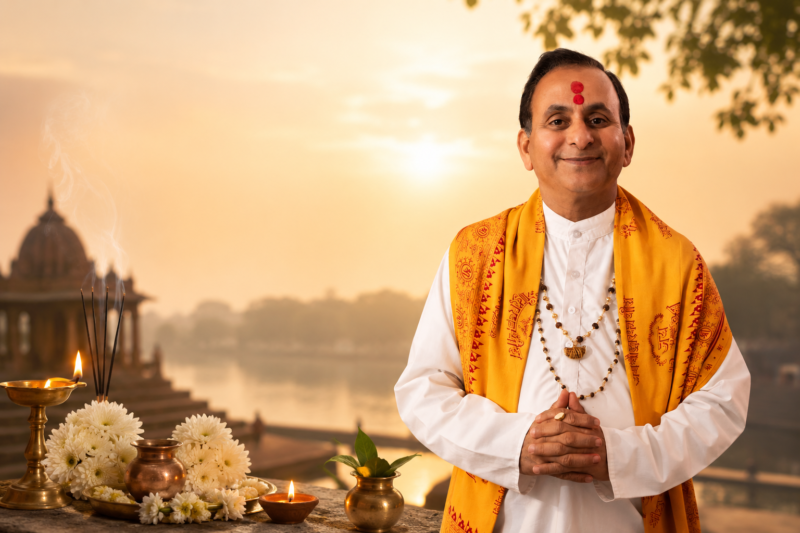
Hindu Priest Ketul Joshi Maharaj provides traditional religious guidance and hindu priest services for families across the UK.
Whether you require a hindu priest london, a hindu priest uk or an experienced Hindu priest elsewhere in Britain, professional guidance can help ensure that ceremonies are conducted respectfully.
Families looking for hindu priest in uk services can discuss their requirements, preferred language and family traditions before confirming arrangements. Experienced Indian priests understand the importance of maintaining cultural and religious customs during these sensitive occasions.
Book Hindu Funeral Priest Services in the UK
Every family deserves a respectful and meaningful farewell for their loved one. From traditional funeral prayers and cremation ceremonies to post-funeral observances, appropriate religious guidance can make a difficult period easier for relatives.
If you require assistance with Hindu funeral mantras, Hindu funeral prayers, cremation ceremonies or the 13-day mourning observances, contact Hindu Priest Ketul Joshi Maharaj.
Hindu Priest Ketul Joshi Maharaj
📞 Phone: +44 7903735365
🌐 Website: https://hindupriestketuljoshi.co.uk/
📧 Email: info@hindupriestketuljoshi.co.uk
Providing traditional Hindu religious services across the UK and worldwide with devotion, dedication and respect for family traditions.