Diwali 2026 UK: Complete Guide to Date, Muhurat, Lakshmi Puja, Vrat Katha, Rituals and Celebrations
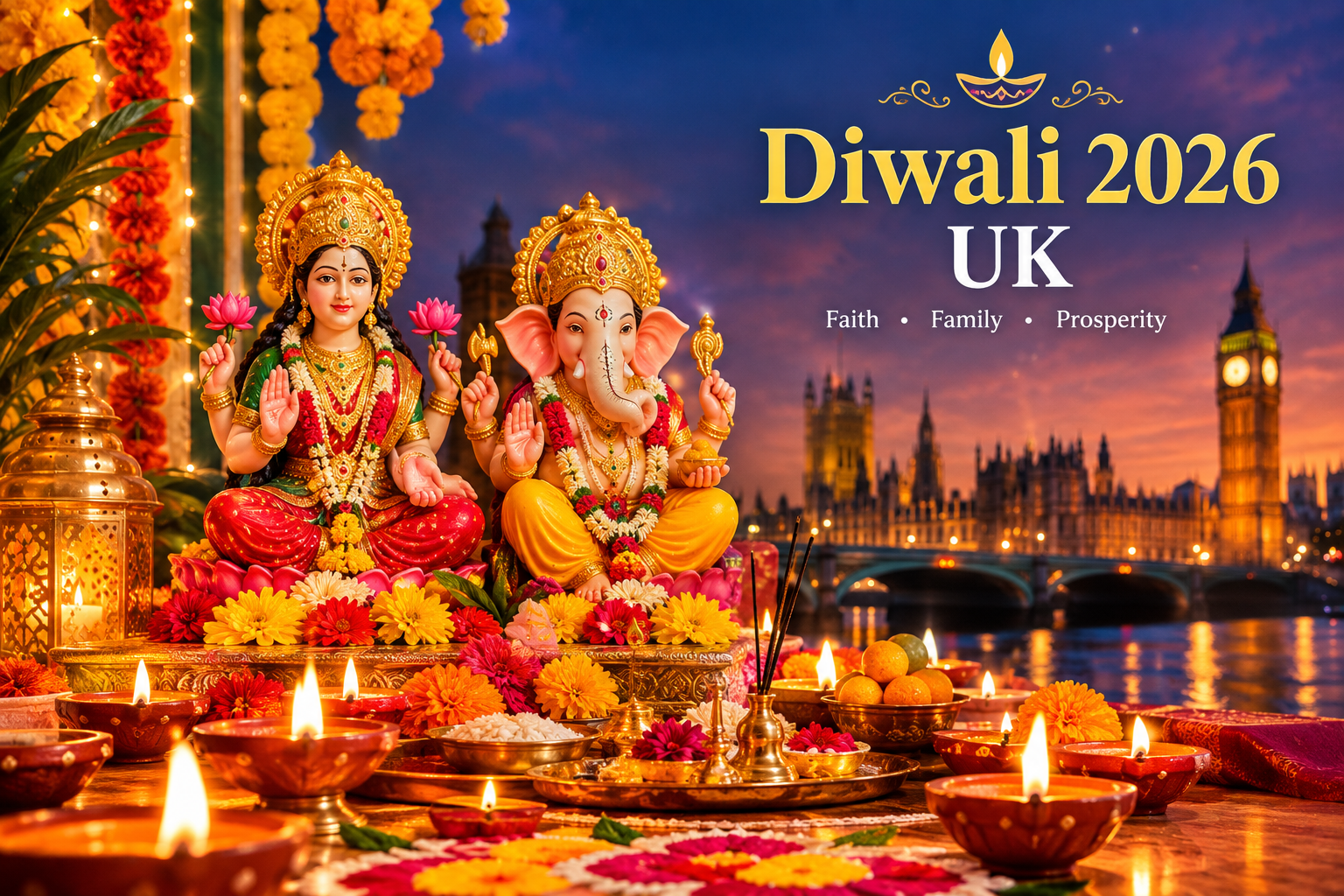
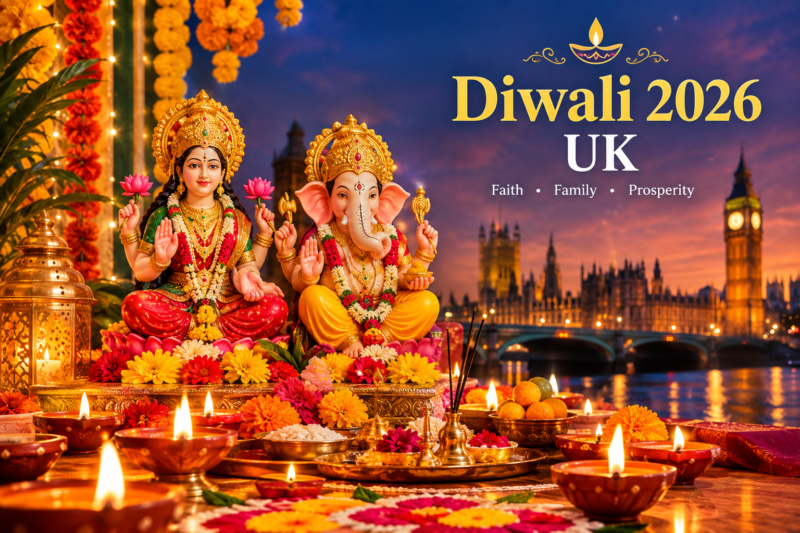
Diwali 2026 is one of the most important Hindu festivals of the year and will be celebrated by Hindu families across the United Kingdom and around the world. Known as the Festival of Lights, Diwali brings families together for prayer, Lakshmi Puja, Ganesh Puja, diyas, rangoli, sweets, family gatherings and traditional celebrations.
For families planning Diwali 2026 in the UK, knowing the correct date, Tithi, Puja Muhurat and traditional sequence is important. Hindu festival timings are calculated according to the local Panchang, so the exact Muhurat can vary between London and other UK cities.
This complete guide explains the Diwali 2026 date, Dhanteras, Narak Chaturdashi, Lakshmi Puja, Govardhan Puja, Bhai Dooj, Diwali Puja Vidhi, Puja Samagri, Diwali Vrat Katha, Dhanteras Vrat Katha, traditional celebrations and how to arrange a Hindu priest for Diwali Puja in the UK.
If you are searching for Diwali 2026 UK, Diwali date 2026, Lakshmi Puja 2026 UK, Diwali Puja UK or a Hindu priest near me, this guide brings the main information together in one place.
Quick Index: What You’ll Find in This Diwali 2026 UK Guide
This complete Diwali 2026 UK guide covers the important dates, puja timings, rituals, vrat katha, samagri and practical information you need to celebrate Diwali in the UK.
In This Guide
- Diwali 2026 UK – Complete Overview
- Diwali 2026 Date and Day
- Diwali Muhurat 2026 – UK Timings
- Dhanteras 2026 – Date, Puja Muhurat & Significance
- Dhanteras Vrat Katha
- Narak Chaturdashi 2026 – Abhyang Snan & Rituals
- Diwali Puja 2026 – Lakshmi Puja Muhurat
- Lakshmi Puja 2026 UK – Puja Vidhi & Rituals
- Diwali Puja Vidhi – Step-by-Step Guide
- Diwali Puja Samagri – Complete Puja Items List
- Diwali Vrat Katha – Traditional Story
- Diwali Lakshmi Ganesh Puja
- Govardhan Puja 2026 – Date, Muhurat & Rituals
- Bhai Dooj 2026 – Date & Significance
- Diwali Celebrations UK – How Hindus Celebrate Diwali
- Diwali Rituals and Traditions
- Diwali Festival – Religious & Cultural Significance
- Deepavali 2026 – Meaning and Traditions
- How to Book a Hindu Priest for Diwali Puja UK
- Hindu Priest UK – Diwali Puja Services & Ceremonies
- Diwali Puja Booking for Homes, Businesses & Families
- Frequently Asked Questions About Diwali 2026 UK
Diwali Puja Services We Provide
If you are looking for professional Diwali Puja services in the UK, we can also help with:
- 🪔 Lakshmi Ganesh Puja
- 🪔 Dhanteras Puja
- 🪔 Diwali Puja at home
- 🪔 Business and office Diwali Puja
- 🪔 Vastu and prosperity-related puja
- 🪔 Chopda Puja / Business Puja
- 🪔 Family Diwali ceremonies
- 🪔 Diwali Havan
- 🪔 Traditional Hindu rituals and prayers
- 🪔 Puja guidance and arrangements
- 🪔 Hindu priest booking across London and the UK
- 🪔 Worldwide and destination Hindu ceremony services
Whether you are searching for a Hindu Priest UK, Hindu Priest London, Hindu Priest Near Me, or a Hindu Priest for Diwali Puja UK, this guide explains the important dates, Muhurat, rituals and booking process in one place.
Diwali 2026 UK Date and Muhurat – Quick Guide
The main Diwali celebration in London will take place on Sunday, 8 November 2026.
The five-day Diwali festival begins with Dhanteras on 6 November and continues through Narak Chaturdashi, Diwali and Lakshmi Puja, Govardhan Puja and Bhai Dooj.
Diwali 2026 UK Festival Dates
| Festival | Date | Day | London Timing / Muhurat |
| Dhanteras / Dhantrayodashi | 6 November 2026 | Friday | 4:43 PM–6:20 PM |
| Narak Chaturdashi | 7 November 2026 | Saturday | Abhyang Snan 5:17 AM–7:04 AM |
| Diwali / Lakshmi Puja | 8 November 2026 | Sunday | Lakshmi Puja 4:35 PM–6:12 PM |
| Govardhan Puja | 9 November 2026 | Monday | 7:08 AM–8:58 AM and 2:30 PM–4:20 PM |
| Bhai Dooj | 10 November 2026 | Tuesday | Check local Panchang for ceremony Muhurat |
The London Lakshmi Puja Muhurat is 4:35 PM to 6:12 PM on Sunday, 8 November 2026. The London Pradosh Kaal is approximately 4:21 PM to 7:19 PM. These timings are location-specific and should not automatically be copied for every UK city.
For families planning a ceremony with a Hindu priest London service, it is recommended to confirm the exact location and local Muhurat before finalising the Puja time.
For general information about Hindu religious services, families can also visit the Hindu Priest UK services page.
When Is Diwali 2026 in the UK?
Diwali 2026 falls on Sunday, 8 November 2026 in London.
The main Diwali celebration takes place on Kartika Amavasya, the new moon day. The evening of Diwali is traditionally associated with Lakshmi Puja, when devotees worship Goddess Lakshmi for prosperity, auspiciousness, spiritual wellbeing and family blessings.
According to the London Panchang, Amavasya begins at approximately 5:57 AM on 8 November and ends at approximately 7:01 AM on 9 November.
The most important evening Puja period for households observing Lakshmi Puja is the published Lakshmi Puja Muhurat of 4:35 PM to 6:12 PM.
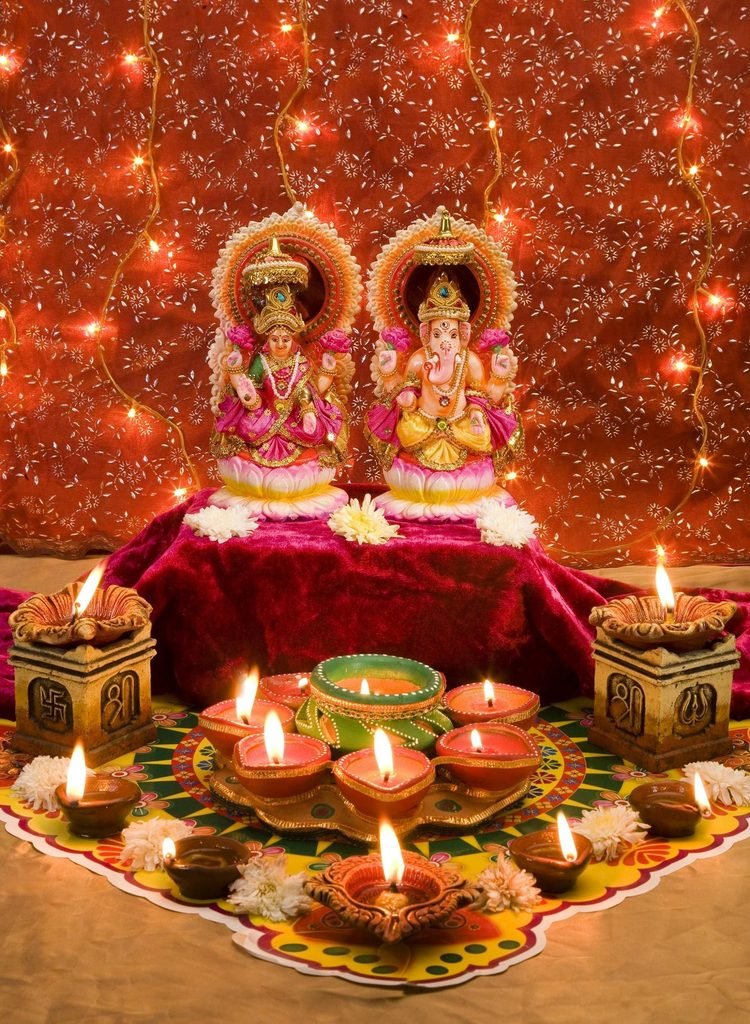
Because the Hindu calendar is calculated according to local astronomical conditions, a London timing should not automatically be used in Birmingham, Leicester, Manchester, Coventry, Luton or other UK locations.
Families looking for a hindu priest in uk should therefore provide their exact town or postcode when making an enquiry.
Diwali 2026 Five-Day Festival Calendar
Diwali is commonly celebrated over five principal days. Each day has its own significance, rituals and traditions.
Day 1 – Dhanteras 2026
Friday, 6 November 2026
Dhanteras, also known as Dhantrayodashi, marks the beginning of the traditional five-day Diwali period.
For London, the Dhanteras Puja Muhurat is approximately:
4:43 PM to 6:20 PM
The Pradosh Kaal is approximately:
4:25 PM to 7:21 PM
The Vrishabha Kaal is approximately:
4:43 PM to 6:20 PM
Dhanteras is traditionally associated with Goddess Lakshmi, Lord Dhanvantari and Lord Kubera. Many families clean their homes, prepare their Puja area and purchase auspicious household items.
The day is also associated with Yama Deepam in many traditions.
The London Dhanteras date and Puja timing are based on the location-specific Panchang calculation.
Day 2 – Narak Chaturdashi 2026
Saturday, 7 November 2026
Narak Chaturdashi is also known as Choti Diwali and, in some traditions, Roop Chaudas or Kali Chaudas.
For London, the Abhyang Snan Muhurat is approximately:
5:17 AM to 7:04 AM
The Chaturdashi Tithi begins at approximately 5:17 AM on 7 November and ends at approximately 5:57 AM on 8 November.
The traditional Abhyang Snan involves an oil bath before sunrise while the relevant Tithi is prevailing.
The day is connected with the story of Lord Krishna’s victory over Narakasura and is observed as a day of purification and preparation for the main Diwali celebration.
Day 3 – Diwali and Lakshmi Puja 2026
Sunday, 8 November 2026
This is the main Diwali day.
The London Lakshmi Puja Muhurat is:
4:35 PM to 6:12 PM
Pradosh Kaal:
4:21 PM to 7:19 PM
Amavasya:
5:57 AM on 8 November to 7:01 AM on 9 November
Families traditionally clean and decorate their homes, light diyas, prepare rangoli and perform Lakshmi Ganesh Puja.
Many families also include Saraswati Puja, Kubera worship or business-related prayers according to their regional and family traditions.
Day 4 – Govardhan Puja 2026
Monday, 9 November 2026
Govardhan Puja celebrates the traditional story of Lord Krishna and Govardhan Hill.
For London, the published morning Muhurat is approximately:
7:08 AM to 8:58 AM
The evening Muhurat is approximately:
2:30 PM to 4:20 PM
Many Vaishnava traditions also prepare Annakut, a large offering of food.
Day 5 – Bhai Dooj 2026
Tuesday, 10 November 2026
Bhai Dooj, also called Bhaiya Dooj or Yama Dwitiya, celebrates the relationship between brothers and sisters.
Sisters traditionally perform Tilak and prayers for their brothers, while brothers offer blessings, gifts and affection.
The precise ceremony Muhurat should be checked for the family’s local UK location and tradition.
What Is Diwali?
Diwali, also known as Deepavali, is one of the most widely celebrated Hindu festivals.
The name Deepavali is commonly understood as a row or series of lights. Diyas are traditionally lit around homes, entrances and Puja areas.
Diwali represents different religious traditions across India and the wider Hindu community.
One major tradition connects Diwali with Lord Rama’s return to Ayodhya after the defeat of Ravana. Other traditions connect the festival with Goddess Lakshmi, Lord Krishna’s victory over Narakasura and Govardhan Puja.
For Hindu families living in the UK, Diwali 2026 can also be an important opportunity to introduce children to Hindu culture, family traditions, prayers and stories.
Why Is Diwali Called the Festival of Lights?
Light has a powerful symbolic meaning in Hindu traditions.
The diya can represent spiritual light, knowledge, hope and the removal of darkness.
During Diwali, families traditionally light diyas around their homes and Puja areas.
Children can also participate by decorating the house, making rangoli, arranging flowers and learning simple prayers.
Diwali therefore combines religious worship with family, cultural and community traditions.
Lakshmi Puja on Diwali 2026
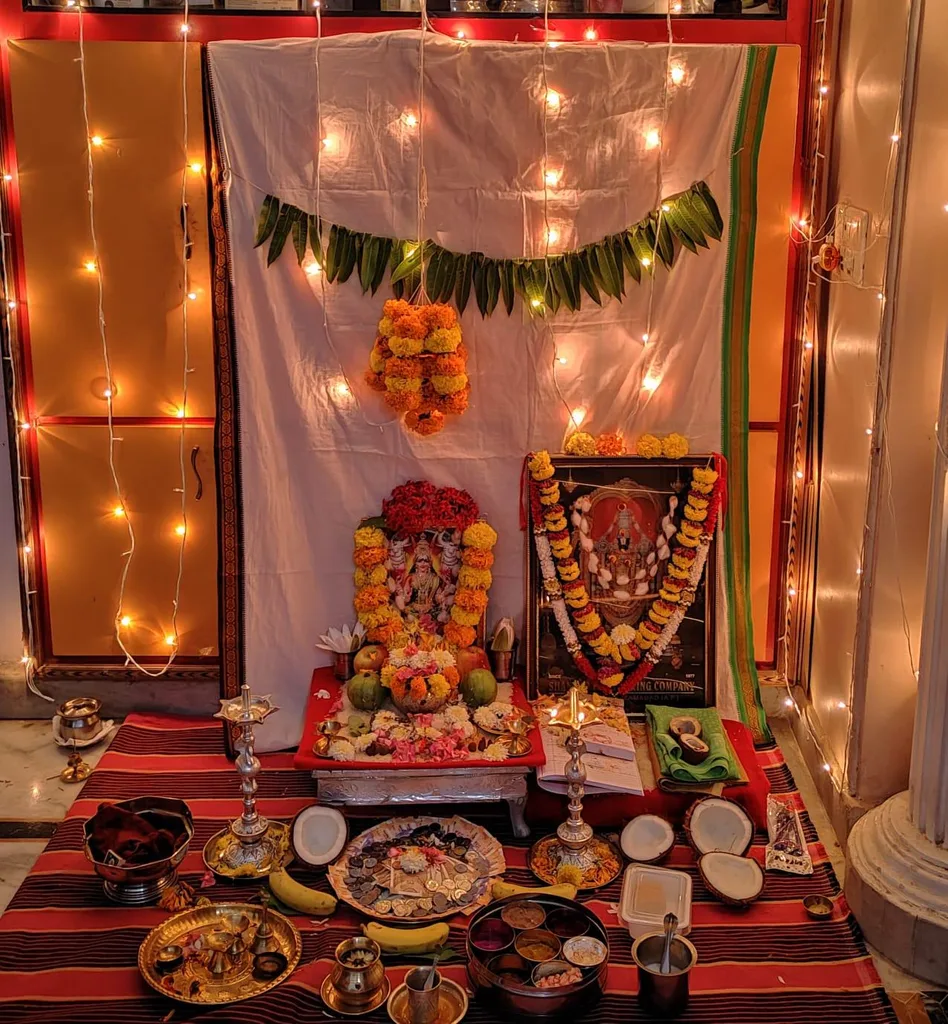
Lakshmi Puja is one of the central rituals of Diwali.
Goddess Lakshmi is traditionally associated with prosperity, abundance, auspiciousness and wellbeing.
Many Hindu families worship Lord Ganesha together with Goddess Lakshmi. Ganesha is traditionally worshipped at the beginning of important ceremonies and is associated with auspicious beginnings.
A traditional Lakshmi Ganesh Puja can include:
- Sankalp
- Ganesh Puja
- Kalash Sthapana
- Lakshmi invocation
- Offerings
- Flowers
- Akshata
- Kumkum
- Chandan
- Dhoop
- Deep
- Naivedya
- Aarti
- Family prayers
If you are planning a home ceremony, you can also read our Hindu Puja services guide for information about traditional Puja ceremonies.
Diwali Puja Vidhi – Step-by-Step
The exact Puja Vidhi varies according to regional and family traditions, but a traditional household ceremony may include the following steps.
1. Clean the Home
Clean the house and especially the Puja area before the ceremony.
2. Decorate the Entrance
Prepare rangoli, flowers, toran and diyas.
3. Prepare the Puja Area
Place a clean cloth and arrange the Lakshmi and Ganesha idols or images.
4. Light the Diya
Light the main Puja diya and incense.
5. Sankalp
The person conducting the Puja makes the Sankalp according to the family tradition.
6. Ganesh Puja
Begin with Lord Ganesha Puja.
Offer flowers, Akshata, sandalwood, sweets and other suitable offerings.
7. Kalash Puja
Prepare and worship the Kalash according to the chosen Puja tradition.
8. Lakshmi Puja
Invoke Goddess Lakshmi and offer flowers, sweets, fruits, Akshata and other traditional offerings.
9. Business Puja
Families who own businesses may perform Chopda Puja or related business prayers.
10. Aarti
Complete the ceremony with Aarti and distribute Prasad.
Diwali Puja Samagri List
A traditional Diwali Puja Samagri list can include:
- Lakshmi idol or picture
- Ganesha idol or picture
- Clean red or yellow cloth
- Puja thali
- Kalash
- Coconut
- Mango leaves
- Akshata
- Kumkum
- Haldi
- Chandan
- Flowers
- Garland
- Diyas
- Cotton wicks
- Ghee or suitable oil
- Incense
- Camphor
- Fruits
- Sweets
- Panchamrit ingredients
- Betel leaves
- Supari
- Coins
- Rice
- Sacred water
- Naivedya
The exact Samagri can vary according to the Puja Vidhi and family tradition.
Dhanteras 2026 – Significance and Puja
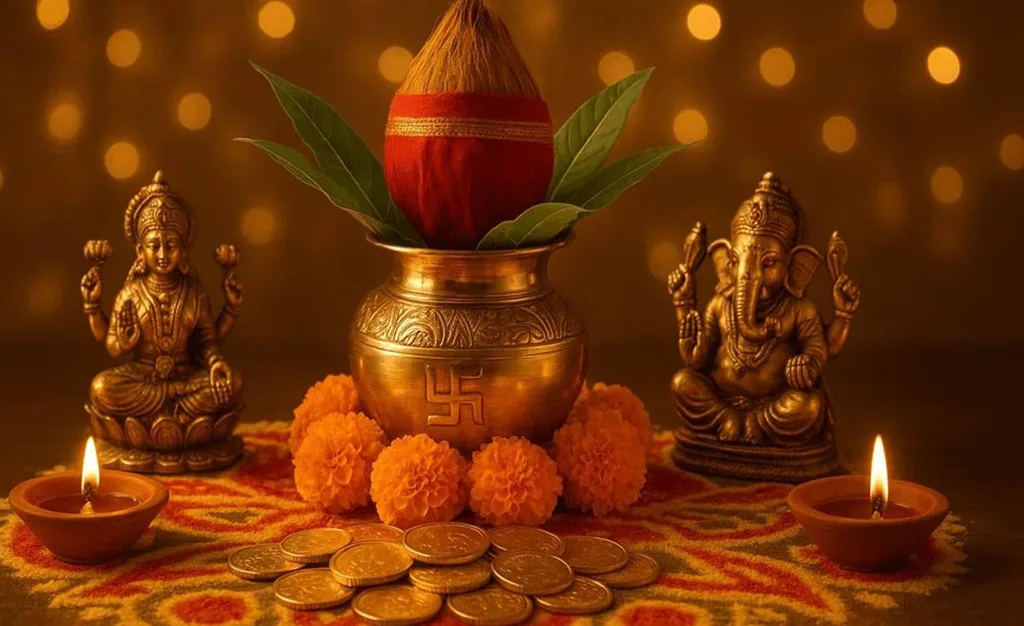
Dhanteras marks the beginning of the Diwali festival.
The word Dhan is associated with wealth, while Teras refers to the thirteenth lunar Tithi.
Dhanteras is traditionally associated with Lord Dhanvantari, Goddess Lakshmi and Lord Kubera.
Many families clean their homes and prepare for the main Diwali Puja.
Some families also purchase gold, silver, utensils or other traditional items on Dhanteras.
For London, the Dhanteras Puja Muhurat in 2026 is approximately 4:43 PM to 6:20 PM.
Dhanteras Vrat Katha
The Dhanteras Vrat Katha is traditionally associated with the importance of devotion, protection and the worship of Lord Dhanvantari and Goddess Lakshmi.
One popular traditional story tells of a king whose son was destined to die from a snakebite at a young age.
According to the traditional Katha, the family was deeply concerned about the prediction. On the night associated with Dhanteras, lamps were placed around the house and a large number of gold and silver ornaments and other precious objects were arranged at the entrance.
The story describes how the power of devotion, light and the observance of the sacred night helped protect the young prince.
Different versions of the Dhanteras Katha exist across regions and traditions. The details can therefore vary between families.
The central message is associated with devotion, the protective symbolism of light and the observance of an auspicious religious occasion.
Families observing Dhanteras Vrat can listen to or recite the Katha according to their own family tradition.
Diwali Vrat Katha
Diwali Vrat Katha traditions vary considerably between communities.
One widely known Diwali tradition is connected with Lord Rama’s return to Ayodhya after completing his exile and defeating Ravana.
According to the Ramayana tradition, Lord Rama, Sita and Lakshmana returned to Ayodhya after the completion of the exile.
The people of Ayodhya welcomed them with rows of lamps.
The lighting of lamps therefore became an important symbol associated with the celebration.
Another important Diwali tradition centres around Goddess Lakshmi.
Families worship Lakshmi on Amavasya and pray for prosperity, wellbeing and auspiciousness.
The Diwali Vrat Katha is therefore understood through several different religious traditions rather than one universally identical story.
For a formal Diwali Puja, families can ask their Hindu priest which Katha and Puja Vidhi is appropriate for their regional or family tradition.
Why Do Hindus Worship Lakshmi and Ganesha on Diwali?
Lakshmi and Ganesha are commonly worshipped together during Diwali.
Goddess Lakshmi is associated with prosperity, abundance and auspiciousness.
Lord Ganesha is traditionally worshipped at the beginning of ceremonies and is associated with auspicious beginnings and removal of obstacles.
Together, Lakshmi Ganesh Puja forms an important part of many household Diwali celebrations.
Diwali Puja for Businesses
Diwali is particularly important for many business families.
A business Diwali Puja may include:
- Lakshmi Puja
- Ganesh Puja
- Chopda Puja
- Business prayer
- Kubera worship according to tradition
- New account-book Puja
Chopda Puja is particularly associated with Gujarati business traditions.
A business Diwali Puja can be performed at:
- Shops
- Offices
- Restaurants
- Warehouses
- Professional offices
- Family businesses
- Commercial premises
If you are looking for a Hindu priest near me for a business Diwali Puja, provide your location and ceremony requirements when making an enquiry.
Diwali Celebrations in London
London has a large and diverse Hindu community.
Families celebrate Diwali in homes, temples, community centres and public venues.
Typical celebrations include:
- Lakshmi Puja
- Ganesh Puja
- Diyas
- Rangoli
- Family prayers
- Sweets
- Traditional food
- New clothes
- Cultural programmes
- Temple visits
- Family gatherings
Families searching for a hindu priest london can arrange a private Diwali Puja at home or another suitable venue.
Diwali Celebrations Across the UK
Diwali is celebrated throughout the United Kingdom.
Hindu families in Leicester, Birmingham, Manchester, Coventry, Luton, Harrow, Wembley, Southall, Slough, Watford and surrounding areas may organise home and community celebrations.
The exact Puja Muhurat can differ according to location.
Therefore, families searching for a hindu priest in uk should provide their town or postcode when enquiring about a Diwali ceremony.
Finding a Hindu Priest for Diwali Puja
Many families search online for a Hindu priest when arranging religious ceremonies.
Searches such as hindu priest uk, hindu priest near me, hindu priest london, Hindu priest and hindu priest in uk can help families discover religious services in their area.
A Hindu priest can guide families through:
- Diwali Puja
- Lakshmi Puja
- Ganesh Puja
- Dhanteras Puja
- Business Puja
- Chopda Puja
- Home Puja
- Family religious ceremonies
If you are looking for a hindu priest near me, it is important to confirm the priest’s location, availability, ceremony type and travel arrangements.
Hindu Priest UK Services for Diwali 2026
If you are planning Diwali 2026 and would like traditional guidance, Hindu Priest Ketul Joshi Maharaj provides Hindu religious services across the UK.
Families looking for a hindu priest uk can enquire about Diwali Puja, Lakshmi Ganesh Puja, Dhanteras Puja and other Hindu ceremonies.
For London families searching for a hindu priest london, home-based Puja services can be discussed according to location and availability.
Families searching for a hindu priest in uk outside London can enquire with their town or postcode.
The Hindu Priest Services page provides further information about available Hindu religious ceremonies.
You can also explore the Hindu Priest UK website for additional information and contact details.
How to Book a Hindu Priest for Diwali
When booking a Hindu priest for Diwali, provide:
- Your town or postcode
- Preferred date
- Preferred Puja time
- Type of Puja
- Number of participants
- Home or business location
- Whether Lakshmi Ganesh Puja is required
- Whether Chopda Puja is required
- Any regional or family tradition
- Whether you require assistance with Puja Samagri
Families should enquire early because Diwali is one of the busiest periods of the Hindu religious calendar.
Diwali Decorations
Diwali decorations traditionally create a clean, welcoming and auspicious atmosphere.
Rangoli
Rangoli can be made at the entrance using coloured powders, rice, flowers or other materials.
Diyas
Diyas can be placed safely around the Puja area and appropriate areas of the home.
Flowers
Marigold and other fresh flowers can be used to decorate the Puja space.
Toran
A traditional toran can be placed at the entrance.
Lakshmi Footprints
Some families create symbolic Lakshmi footprints leading from the entrance toward the Puja area.
Traditional Diwali Food and Sweets
Food is an important part of family Diwali celebrations.
Popular traditional sweets include:
- Ladoo
- Barfi
- Kaju Katli
- Peda
- Jalebi
- Halwa
- Shrikhand
Families may also prepare savoury snacks and a traditional vegetarian meal.
Food offered during Puja should follow the family’s religious and regional customs.
Diwali and Children
Diwali 2026 is an excellent opportunity to teach children about Hindu traditions.
Parents can explain:
- Why diyas are lit
- Why Lakshmi is worshipped
- Why Ganesha is worshipped
- The story of Lord Rama
- The significance of Dharma
- Why families perform Puja
- The importance of gratitude
- Respect for family traditions
Children can participate by helping with simple decorations, rangoli, flowers and age-appropriate prayers.
Diwali Stories and Regional Traditions
There is no single story that represents every community’s Diwali tradition.
Lord Rama and Ayodhya
One of the best-known traditions connects Diwali with Lord Rama’s return to Ayodhya after his victory over Ravana.
Lord Krishna and Narakasura
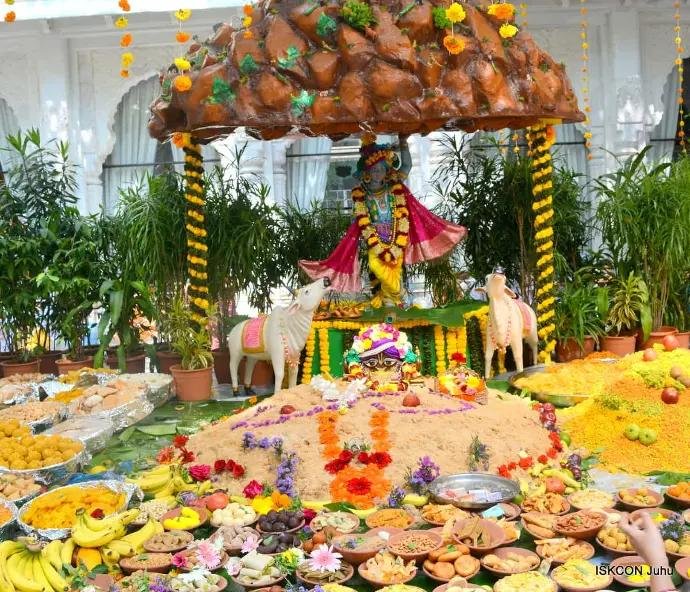
Narak Chaturdashi is associated with Lord Krishna’s victory over Narakasura.
Goddess Lakshmi
Lakshmi Puja is central to Diwali celebrations for many Hindu families.
Govardhan Puja
Govardhan Puja commemorates the traditional story of Lord Krishna and Govardhan Hill.
Different communities may emphasise different stories and rituals.
Diwali Traditions Across India
Gujarat
Gujarati families often place particular importance on Lakshmi Puja, Chopda Puja and the Gujarati New Year.
Maharashtra
Families observe Dhanteras, Narak Chaturdashi, Lakshmi Puja, Padwa and Bhai Dooj.
North India
Diwali is strongly associated with Lord Rama’s return to Ayodhya, Lakshmi Puja and lighting diyas.
Bengal
Kali Puja has a major place in Diwali-period celebrations.
South India
Deepavali traditions can place particular emphasis on the morning celebration, oil bath and family rituals.
Families in the UK may continue the traditions of their ancestral region while adapting the celebration to their British home environment.
Diwali 2026 FAQs
When is Diwali 2026 in the UK?
Diwali 2026 falls on Sunday, 8 November 2026 in London.
What is the Diwali 2026 date?
The main Diwali date is Sunday, 8 November 2026.
When is Dhanteras 2026?
Dhanteras falls on Friday, 6 November 2026.
What is the Dhanteras Puja Muhurat in London?
The London Dhanteras Puja Muhurat is approximately 4:43 PM to 6:20 PM.
When is Narak Chaturdashi 2026?
Narak Chaturdashi falls on Saturday, 7 November 2026.
When is Lakshmi Puja 2026?
Lakshmi Puja is performed on Sunday, 8 November 2026.
What is the Lakshmi Puja Muhurat in London?
The London Lakshmi Puja Muhurat is 4:35 PM to 6:12 PM.
When is Govardhan Puja 2026?
Govardhan Puja falls on Monday, 9 November 2026.
When is Bhai Dooj 2026?
Bhai Dooj falls on Tuesday, 10 November 2026.
What is Diwali Vrat Katha?
Diwali Vrat Katha refers to traditional stories recited or heard during Diwali observance. Different communities follow different Kathas, including traditions associated with Lord Rama and Goddess Lakshmi.
What is Dhanteras Vrat Katha?
Dhanteras Vrat Katha refers to traditional stories associated with Dhanteras, devotion, protection, Lord Dhanvantari and auspiciousness. Different regional versions exist.
Can I perform Diwali Puja at home?
Yes. Many families perform Diwali Puja at home according to their family tradition.
Can I book a Hindu priest for Diwali Puja?
Yes. Families can enquire about a Hindu priest UK or Hindu priest London for home and business Diwali Puja.
How do I find a Hindu priest near me?
Search for a Hindu priest near me and confirm the priest’s location, availability, ceremony type and travel arrangements.
Can a Hindu priest perform Lakshmi Puja at my business?
Yes. A Hindu priest can perform Lakshmi Ganesh Puja and business-related Puja according to the family’s tradition.
Are Diwali Muhurat timings the same throughout the UK?
No. Muhurat timings vary according to location. London timings should not automatically be used for Birmingham, Leicester, Manchester or other cities.
Why is Diwali celebrated?
Diwali has several religious and regional meanings, including traditions associated with Lord Rama, Goddess Lakshmi, Lord Krishna and the symbolism of light overcoming darkness.
What is the difference between Diwali and Deepavali?
Diwali and Deepavali are names used for the Festival of Lights. Regional traditions, pronunciation and rituals can differ.
How early should I book a Hindu priest for Diwali?
Early booking is recommended because Diwali is one of the busiest periods for Hindu religious services.
Book Your Diwali Puja in the UK
Diwali is a special time for family, prayer, devotion and the celebration of Hindu traditions.
Whether you are planning Lakshmi Ganesh Puja at home, Dhanteras Puja, Diwali Vrat Katha, business Puja or another traditional ceremony, a Hindu priest can help guide the family through the appropriate rituals and prayers.
Hindu Priest Ketul Joshi Maharaj provides Hindu religious services across the UK.
Families searching for hindu priest uk, hindu priest near me, hindu priest london, Hindu priest, hindu priest in uk or Indian priests can enquire about Diwali 2026 availability.
Hindu Priest Ketul Joshi Maharaj
The Hindu Priest Ltd
📱 +44 7903735365
🌐 www.hindupriestketuljoshi.co.uk
📧 info@hindupriestketuljoshi.co.uk
For more information, visit the Hindu Priest Services page or the Hindu Priest UK website.
Final Thoughts on Diwali 2026
Diwali 2026 is an opportunity for Hindu families to celebrate light, devotion, family, gratitude and traditional culture.
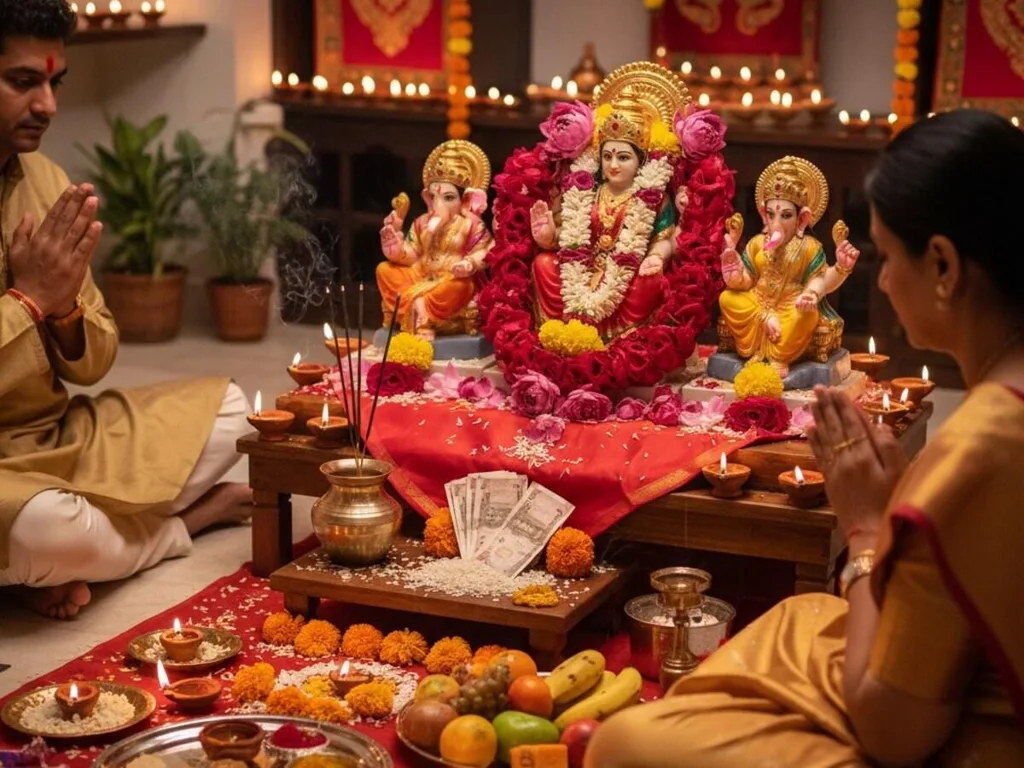
The main Diwali and Lakshmi Puja day in London is Sunday, 8 November 2026. The traditional five-day festival begins with Dhanteras on 6 November and continues through Narak Chaturdashi, Diwali, Govardhan Puja and Bhai Dooj.
Families can prepare their homes, organise Puja Samagri, decorate with diyas and rangoli, learn the stories behind the festival and gather together for Lakshmi Ganesh Puja.
If you are planning a Diwali ceremony with a Hindu priest, confirm your location, preferred ceremony and local Muhurat in advance.
May Goddess Lakshmi and Lord Ganesha bless your family with peace, wisdom, prosperity and wellbeing.
Shubh Diwali 2026!